
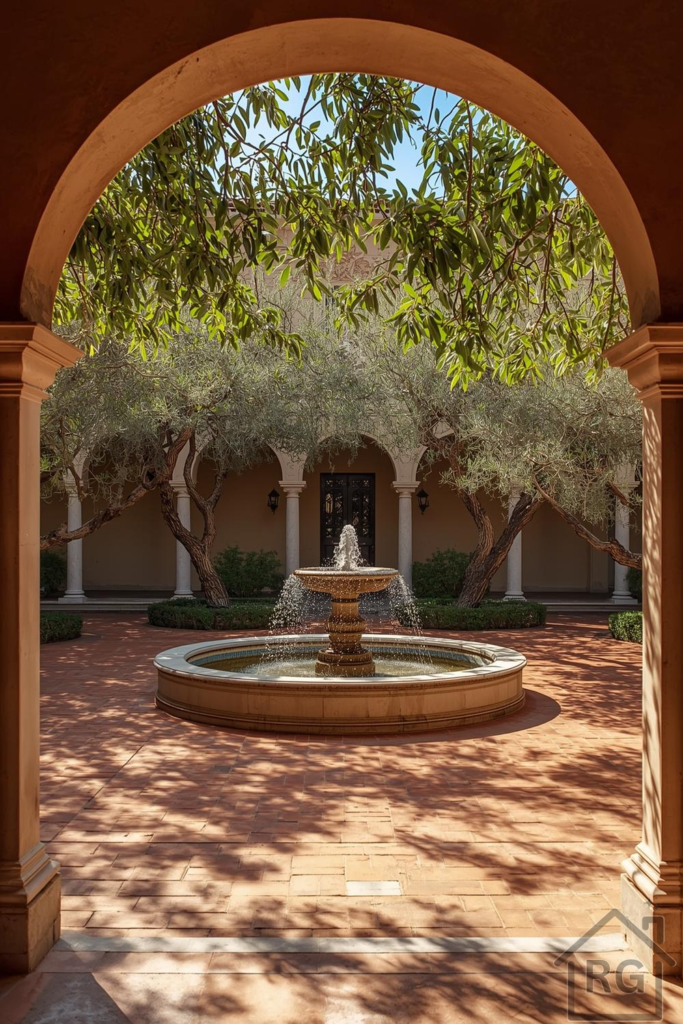
Step into a world where time slows down, where the sun kisses warm stone, and the gentle murmur of water creates a symphony of calm. The Mediterranean courtyard, as beautifully captured in this image, is more than just an outdoor space; it’s a sanctuary designed for relaxation and connection with nature. With its iconic elements like a central fountain, graceful olive trees, and sun-baked terracotta, this style offers a timeless appeal that can transform any yard into a personal haven.
The Allure of the Mediterranean Courtyard
The Mediterranean aesthetic is rooted in a rich history of outdoor living, emphasizing comfort, beauty, and functionality. It’s a style that thrives in sunny climates, making the most of natural light and materials. Key to its charm are elements that provide shade, encourage gathering, and engage the senses. This particular sunny Mediterranean courtyard exemplifies the style with its harmonious blend of natural textures, a soothing water feature, and lush, resilient planting.
The Heart of the Courtyard: The Fountain
A central fountain is arguably the most defining feature of a Mediterranean courtyard. As seen in our inspiring image, the tiered stone fountain acts as a magnificent focal point, drawing the eye and providing a sensory experience that is both visual and auditory. The sound of splashing water is inherently calming, masking ambient noise and creating a peaceful atmosphere.
Choosing Your Fountain
When selecting a fountain, consider its scale relative to your Mediterranean courtyard. A grand, multi-tiered stone fountain like the one pictured commands attention in a larger space, while a smaller wall-mounted or basin fountain might suit a more compact area. Materials are crucial; natural stone, whether limestone, sandstone, or concrete designed to mimic stone, will best capture the authentic Mediterranean feel. The warm beige and cream tones of the fountain in the image perfectly complement the surrounding architecture and pavers.
Placement and Maintenance
Positioning your fountain centrally allows it to be admired from all angles, creating a natural gathering point. Ensure it’s easily accessible for cleaning and maintenance. Regular cleaning prevents algae buildup and keeps the water sparkling. Consider adding a pump with adjustable flow to control the water’s sound and visual impact.
Cultivating Mediterranean Flora: Olive Trees and Beyond
No Mediterranean courtyard is complete without its characteristic flora, and the olive trees in this scene are perfect examples. Their gnarled trunks and silvery-green foliage add an ancient, sculptural quality, providing dappled shade and a sense of enduring beauty. These trees are incredibly resilient and drought-tolerant, making them ideal for sunny, arid climates.
The Majesty of Olive Trees
Olive trees (Olea europaea) are symbolic of peace and longevity. Their distinctive light green to silvery-green leaves shimmer in the sunlight, creating a dynamic visual texture. When planting, ensure they have well-drained soil and plenty of sun. While relatively low-maintenance once established, young trees may need protection in colder winters. The mature olive trees in the image provide a wonderful canopy, filtering the bright sun and casting intricate shadows on the terracotta below.
Complementary Planting
Beyond olive trees, consider other drought-tolerant plants that thrive in Mediterranean climates. Manicured hedges, like the dark green shrubs bordering the walls in the image, provide structure and a neat contrast to the organic forms of the trees. Other excellent choices include lavender, rosemary, bougainvillea, citrus trees, and various succulents. These plants often feature fragrant blooms or aromatic foliage, further enhancing the sensory experience of your sunny Mediterranean courtyard. Use terracotta pots for smaller plants to tie into the overall color scheme.
Grounding Your Design: Terracotta and Stone
The hardscaping materials you choose form the foundation of your Mediterranean courtyard’s aesthetic. The rich, reddish-brown terracotta pavers in the image are quintessential to the style, exuding warmth and authenticity.
The Warmth of Terracotta
Terracotta tiles or pavers are celebrated for their earthy tones, ranging from deep reds to burnt oranges and soft browns. They absorb the sun’s warmth, creating a cozy feel, and develop a beautiful patina over time. When selecting terracotta, consider its durability and slip resistance, especially in areas prone to moisture. Laying patterns, such as herringbone or basketweave, can add visual interest to the expansive surface.
Elegant Stone Elements
Stone is another cornerstone of Mediterranean courtyard design. The creamy, warm beige stone used for the fountain, columns, and architectural trim in the image provides a beautiful contrast to the terracotta. This natural material adds a sense of permanence and classic elegance. Whether it’s limestone, travertine, or a similar natural stone, its texture and color contribute significantly to the courtyard’s sophisticated yet rustic charm. Stucco walls, often painted in warm beige, off-white, or soft ochre, complete the architectural backdrop, reflecting light and creating a bright, inviting atmosphere.
Architectural Elements and Ambiance
The architectural framework of a Mediterranean courtyard is as important as its plantings and features. Arches, columns, and sturdy walls define the space and provide a sense of enclosure and grandeur.
Arches and Columns
The arched entryway and the colonnade visible in the background of the image are characteristic of Mediterranean architecture. These elements create a sense of depth and invite exploration, framing views and offering shaded walkways. The white or cream-colored columns stand out against the warm beige stucco walls, adding classical elegance. If you’re building new or renovating, incorporating these structural elements can dramatically elevate the style of your Mediterranean courtyard.
Lighting and Details
Thoughtful lighting extends the usability of your Mediterranean courtyard into the evening. Wall sconces, like those flanking the dark wooden double doors in the background, provide ambient light that highlights architectural features and creates a welcoming glow. Consider string lights draped over trees or pergolas for a festive touch, or subtle uplighting for your olive trees to emphasize their sculptural forms. Dark wooden doors, often intricately carved or paneled, add a touch of rustic sophistication and contrast beautifully with lighter stucco walls.
Crafting Your Own Mediterranean Retreat
Creating a Mediterranean courtyard involves careful planning and a harmonious blend of elements. Here are some actionable tips to help you achieve this sunny, tranquil aesthetic:
Define Your Layout
Mediterranean courtyards often feature a sense of symmetry and balance, with a central focal point like a fountain. Plan your layout to create clear pathways and distinct zones for relaxation, dining, or contemplation. Use low hedges or planters to define these areas without obstructing views.
Choose Durable Materials
Given the outdoor setting and often sunny conditions, select materials that are built to last. Terracotta, natural stone, and stucco are excellent choices for their durability and ability to withstand the elements while maintaining their aesthetic appeal. Ensure any wooden elements, like doors or pergolas, are treated for outdoor use.
Embrace Earthy Color Palettes
Stick to a palette inspired by the Mediterranean landscape: warm reddish-browns of terracotta, creamy beiges and off-whites of stucco and stone, deep greens and silvery-greens of foliage, and accents of sky blue. These colors create a cohesive and calming environment.
Incorporate Water Features
Even a small Mediterranean courtyard can benefit from a water feature. If a large fountain isn’t feasible, consider a wall-mounted spigot flowing into a basin or a collection of ceramic water pots. The sound of water is key to the Mediterranean experience.
Select Resilient Plants
Prioritize drought-tolerant and sun-loving plants. Olive trees are a fantastic investment, but if your climate isn’t suitable, look for alternatives with similar leaf color and growth habits. Rosemary, lavender, and various succulents offer beautiful textures and scents.
Add Personal Touches
Enhance the ambiance with decorative elements. Ceramic pots filled with vibrant flowers, wrought iron furniture, or even a simple bench can add character. Remember, the goal is to create a space that feels both elegant and inviting, a true extension of your home.
By thoughtfully combining a central fountain, the timeless beauty of olive trees, and the warm embrace of terracotta and stone, you can design a sunny Mediterranean courtyard that offers a serene escape right outside your door. It’s a space where every detail contributes to a feeling of peace and enduring charm, inviting you to linger and enjoy the simple pleasures of outdoor living.