
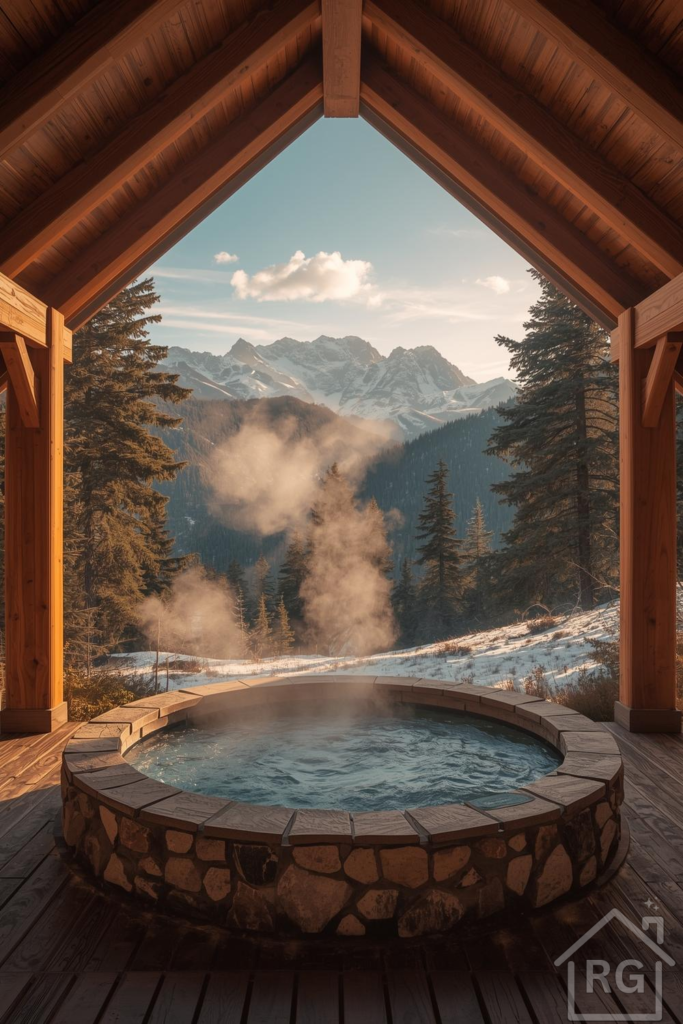
Envision a sanctuary where the warmth of bubbling water meets the crisp mountain air, surrounded by majestic peaks and serene forests. This guide will walk you through the elements needed to recreate such a breathtaking outdoor space, focusing on durable materials, harmonious design, and practical considerations for a truly luxurious mountain retreat.
Embracing the Natural Palette: Colors of the Alpine Dream
Achieving seamless integration with the natural environment is key. The dominant colors are drawn directly from the landscape: rich, earthy browns of the wooden structure and deck, deep, calming blues of the sky and hot tub water, vibrant, dark forest greens of the evergreen trees, and pristine, cool grays and whites of the snow-capped mountains. A touch of pale yellow or cream from the warm sunlight adds a golden glow, enhancing the inviting atmosphere.
When designing your own space, consider how these natural hues can be incorporated. For instance, selecting wood stains that echo the surrounding trees or choosing stone for hardscaping that blends with local rock formations will create a cohesive and visually appealing environment.
Foundation of Durability: Material Selection for Mountain Climates
Creating an outdoor space in a mountain environment demands materials that can withstand harsh weather conditions, from heavy snowfalls to intense sun and fluctuating temperatures. The key is durability and natural beauty.
Wood: The Heart of the Structure
The prominent wooden deck and overhead pergola provide both structural integrity and rustic charm. For such an application, consider woods known for their natural resistance to decay and insects, such as cedar, redwood, or pressure-treated pine. Cedar and redwood offer beautiful natural tones and are highly stable, while pressure-treated pine is a more economical yet robust option.
Ensure all wood is properly sealed and stained with a high-quality outdoor product to protect against moisture, UV damage, and rot. Regular maintenance, including re-sealing every few years, will preserve its beauty and extend its lifespan. The rough-hewn texture of the beams adds to the authentic mountain lodge aesthetic.
Stone: Grounding the Hot Tub
The hot tub’s surround is crafted from natural stone, providing a sturdy, visually appealing base that complements the rugged mountain backdrop. Options like river rock, fieldstone, or flagstone can be used to create a similar effect. Stone is incredibly durable, requires minimal maintenance, and offers excellent thermal mass, which can help retain heat around the hot tub. When selecting stone, consider local varieties to ensure it harmonizes with the surrounding landscape and reduces transportation costs.
Water: The Centerpiece
The hot tub itself is the focal point. Modern hot tubs are designed for energy efficiency and durability, even in cold climates. Look for models with robust insulation, high-quality pumps, and reliable heating systems. The choice of interior finish, often acrylic, should be smooth and easy to clean, contributing to the inviting blue hue of the water.
The Art of Placement: Hot Tub and Deck Layout
The placement of your hot tub and deck is paramount, especially when a stunning view is available. In this image, the hot tub is strategically positioned to offer an unobstructed panorama of the mountains, framed by the wooden structure. Here are tips for optimizing your layout:
Maximize the View
Identify the best vantage point on your property. This might mean positioning the hot tub slightly elevated or on a specific side of your deck to capture sunrise, sunset, or mountain vistas. Consider the angle from which you’ll be soaking — will you be facing the view directly?
Privacy Considerations
While the image emphasizes openness, privacy is often crucial. If your view is shared with neighbors, consider strategic landscaping (e.g., tall evergreens, privacy screens) or the design of your pergola to offer seclusion without completely blocking the view.
Accessibility and Flow
Ensure easy and safe access to the hot tub from your home. The wooden deck provides a clean, slip-resistant surface around the tub. Consider pathways, steps, and handrails, especially in snowy or icy conditions. The layout should allow for comfortable movement around the hot tub for entry, exit, and maintenance.
Structural Support
A hot tub filled with water and people is extremely heavy. The deck and underlying structure must be engineered to support this significant weight. Consult with a structural engineer or experienced contractor to ensure your deck can safely accommodate the hot tub.
Landscaping for Alpine Serenity: Plants and Hardscaping
The surrounding landscape plays a vital role in enhancing the mountain retreat feel. While the image shows a natural, snow-covered environment, thoughtful landscaping can integrate your space even further.
Evergreen Elegance
The tall evergreen trees (likely pines or firs) are characteristic of mountain regions. Incorporate native evergreen species into your landscape design. They provide year-round greenery, privacy, and a sense of scale that complements the vastness of the mountains. Consult local nurseries for species that thrive in your specific climate zone and soil conditions.
Snow Management
In snowy regions, consider how snow will accumulate and be managed around your hot tub. The deck provides a clear surface, but pathways to and from the tub should be kept clear. Heated mats or strategically placed snowmelt systems can be a luxurious addition for winter access.
Minimalist Hardscaping
Beyond the hot tub surround, keep additional hardscaping minimal to let the natural environment shine. Simple stone pathways or strategically placed boulders can enhance the rugged aesthetic without overwhelming the scene.
Atmosphere and Ambiance: Creating a Sensory Experience
The true magic of this mountain retreat lies in its atmosphere. Beyond the visual, consider how to engage all senses for a truly immersive experience.
Subtle Lighting
While not prominent in the daytime image, evening lighting is crucial. Opt for warm, low-level lighting that doesn’t detract from the stars or the natural glow of the snow. Recessed deck lights, subtle path lighting, or even waterproof LED strips around the hot tub can create a magical ambiance. Avoid harsh floodlights. Solar-powered options are eco-friendly and easy to install.
Soundscape
Embrace the natural sounds of the mountains — the rustle of wind through pines, the distant call of wildlife, the gentle bubbling of the hot tub. If ambient noise is an issue, consider a small water feature or wind chimes to create soothing background sounds.
Warmth Beyond the Water
For colder evenings, consider adding an outdoor fireplace or a fire pit nearby. The crackle of a fire and its radiant heat can extend your enjoyment of the outdoor space, providing a cozy gathering spot before or after a soak.
Aromatherapy
The fresh scent of pine and crisp mountain air is invigorating. You can enhance this with essential oils designed for hot tub use, or simply by ensuring good ventilation around your tub.
DIY Touches and Maintenance Tips
While building a structure like this might require professional help, there are many DIY aspects you can tackle to personalize and maintain your mountain retreat.
Deck Staining and Sealing
Regularly cleaning, staining, and sealing your wooden deck and pergola is a manageable DIY task. Choose a stain color that complements the natural browns of the wood and the surrounding landscape. This protects the wood and keeps it looking fresh.
Hot Tub Water Chemistry
Learning to balance your hot tub’s water chemistry is essential for hygiene and longevity. Test kits are readily available, and most hot tub manufacturers provide clear guidelines. This ensures your water is always clean, clear, and safe for soaking.
Winterizing and Opening
If you plan to use your hot tub year-round, understand the specific winterization procedures for your model to prevent freezing damage. If you close it for the season, proper draining and covering are crucial. Conversely, learn the steps for safely opening it in the spring.
Landscaping Maintenance
Simple tasks like clearing snow from pathways, pruning evergreen branches, and keeping the area around the hot tub free of debris will maintain the pristine look of your retreat.
Conclusion: Your Personal Mountain Sanctuary Awaits
Creating an outdoor mountain hot tub retreat like the one pictured is an investment in relaxation, well-being, and connection with nature. By carefully selecting durable materials like rich brown wood and natural stone, optimizing the layout for breathtaking views, and integrating thoughtful landscaping with dark green evergreens and pristine white snow, you can design a space that is both functional and profoundly beautiful.
Whether you’re seeking a tranquil escape after a day on the slopes or a serene spot to unwind under the vast blue sky, your personalized mountain hot tub retreat will offer a luxurious haven for years to come. Start planning your dream outdoor space today and bring the majesty of the mountains to your doorstep.