
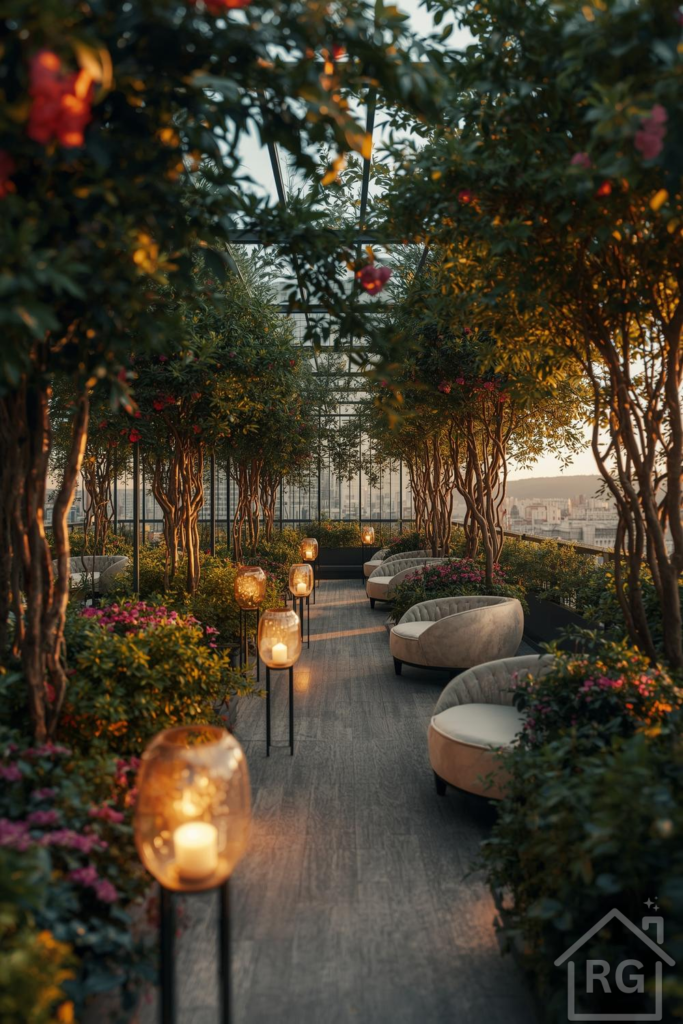
Imagine escaping the urban hustle without leaving the city. A rooftop garden isn’t just a luxury; it’s a transformative experience, turning unused space into a vibrant, serene haven. The image before us perfectly encapsulates this dream: a lush, inviting space bathed in the warm glow of evening lights, offering a breathtaking view of the cityscape. Recreating such a retreat requires thoughtful planning, a keen eye for design, and an understanding of practical considerations. Let’s delve into how you can bring this enchanting vision to life.
Crafting the Ambiance: Light, Comfort, and Greenery
The magic of a stunning rooftop garden lies in its captivating ambiance, a delicate balance of light, comfortable seating, and abundant plant life. Achieving this requires a multi-faceted approach.
Illuminating Your Rooftop: The Art of Warm Lighting
Notice the inviting, soft glow emanating from the standing glass lanterns in the image. This warm, amber light is crucial for setting a tranquil and intimate mood. For your own rooftop, consider a layered lighting scheme:
- Ambient Lighting: Replicate the look with standing lanterns or floor lamps. Choose solar-powered options for sustainability and ease of installation, or low-voltage LED fixtures for a consistent glow. Look for designs with frosted or amber glass to diffuse the light softly.
- Accent Lighting: Use spotlights to highlight specific trees or architectural features. String lights, draped overhead or woven through trellises, can add a festive, whimsical touch.
- Pathway Lighting: Small, recessed lights along pathways or solar-powered stake lights can guide visitors safely while adding to the overall glow.
The key is to avoid harsh, bright lights. Opt for warm white or amber tones (around 2200K-2700K) to create that cozy, inviting atmosphere. Dimmers are an excellent investment, allowing you to adjust the intensity for different occasions.
Seating for Serenity: Comfort Meets Durability
The curved, upholstered lounge chairs in the image beckon you to relax. When selecting outdoor furniture, prioritize both comfort and resilience. For a similar aesthetic:
- Material Matters: Look for outdoor-grade upholstery fabrics that are resistant to fading, mildew, and moisture. Sunbrella® or similar acrylic fabrics are excellent choices, often available in sophisticated neutral tones like soft beige or light grey.
- Frame Durability: Aluminum or powder-coated steel frames offer rust resistance and stability. Wicker (synthetic resin wicker) can also provide a classic, comfortable look.
- Layout for Intimacy: Arrange seating to encourage conversation and relaxation. In the image, chairs are placed to face the pathway and the view, creating individual pockets of comfort. Consider grouping two chairs with a small side table for drinks, or a larger sectional for entertaining.
Remember that even with durable materials, cushions may benefit from being stored indoors during harsh weather or covered with protective covers.
The Green Heart: Lush Plant Selection
The dense foliage and mature trees are the soul of this rooftop garden, transforming it into a verdant retreat. Replicating this requires careful plant selection tailored to your climate and the unique challenges of a rooftop environment.
- Trees for Structure: Choose dwarf varieties or those known for their compact root systems and wind resistance. Japanese maples, certain fruit trees (like dwarf citrus), or columnar evergreens can provide height and shade. Ensure your rooftop can support the weight of large trees and their planters.
- Flowering Shrubs: The vibrant pink and red blooms add splashes of color and life. Consider hardy, long-blooming varieties like Azaleas, Rhododendrons (if your climate supports them), or even certain types of Roses. For a Mediterranean feel, Bougainvillea or Oleander can provide stunning color, though they may require more specific care.
- Underplanting & Groundcover: Fill in the lower levels with lush, low-maintenance plants. Hostas, ferns (for shaded areas), or various types of sedum and succulents are excellent for adding texture and suppressing weeds.
- Vertical Greenery: If space is limited, consider vertical gardens or trellises with climbing plants like Clematis or Jasmine to maximize greenery.
Always select plants that are suitable for your USDA hardiness zone and can withstand rooftop conditions such as strong winds, intense sun exposure, and fluctuating temperatures. Drought-tolerant plants are often a wise choice for easier maintenance.
Practical Foundations: Ensuring Longevity and Safety
A beautiful rooftop garden is built on a solid, well-planned foundation. Overlooking these practical aspects can lead to costly issues down the line.
Structural Integrity and Weight Distribution
This is paramount. Before adding any significant weight (large planters, heavy furniture, soil), consult with a structural engineer to assess your building’s capacity. Rooftops are designed for specific load limits, and exceeding them can be dangerous. Always distribute weight evenly, and consider lighter alternatives like fiberglass planters instead of heavy concrete ones.
Drainage Systems: Preventing Water Damage
Proper drainage is critical to prevent water accumulation, which can damage the building structure and harm plants. Ensure your rooftop has adequate drainage points, and consider installing a drainage mat beneath your decking or pavers to facilitate water flow. All planters must have drainage holes, and you might want to elevate them slightly to prevent waterlogging.
Material Choices for Durability
The grey, wood-look outdoor tiles in the image are an excellent example of durable, stylish flooring. When selecting materials for your rooftop, think long-term resilience:
- Flooring: Porcelain tiles, composite decking, or even treated wood decking are excellent choices. Porcelain tiles are highly durable, slip-resistant, and come in a vast array of styles, including realistic wood or stone looks. They are also low maintenance.
- Railings: The sleek glass railings with black metal frames offer unobstructed views while providing safety. Tempered glass is strong and safe, and metal frames (aluminum or powder-coated steel) are weather-resistant.
- Planters: Opt for weather-resistant materials like fiberglass, lightweight concrete, or high-quality resin. Ensure they are frost-proof if you live in a cold climate.
Choosing materials that can withstand UV radiation, extreme temperatures, and moisture will significantly reduce maintenance and extend the life of your rooftop garden.
DIY Touches and Personalization
While professional help might be needed for structural elements, many aspects of a rooftop garden can be a rewarding DIY project.
- Planter Selection & Arrangement: Experiment with different sizes and shapes of planters. Grouping planters of varying heights creates visual interest. Consider self-watering planters for easier maintenance.
- Herb & Vegetable Garden: Dedicate a small section to growing herbs or compact vegetables. This adds a functional element and fresh produce to your urban retreat.
- Water Features: A small, self-contained fountain can add soothing sounds and attract birds, enhancing the sensory experience.
- Decorative Elements: Beyond the lanterns, consider adding outdoor rugs for warmth, weather-resistant throw pillows for extra comfort, or sculptures that reflect your personal style.
Remember, the goal is to create a space that feels uniquely yours, a true extension of your indoor living area.
Plant Selection and Care for Rooftop Environments
Rooftop gardens present unique challenges for plants due to increased sun exposure, wind, and often shallower soil depths in planters. Careful selection and ongoing care are vital.
Choosing the Right Plants:
- Wind Resistance: Select plants with strong, flexible stems and smaller leaves. Avoid plants that are brittle or have large, delicate leaves that can be easily damaged by wind.
- Drought Tolerance: Many rooftops experience higher temperatures and faster soil drying. Succulents, ornamental grasses, lavender, and certain Mediterranean herbs are excellent choices.
- Sun Exposure: Assess how much direct sunlight your rooftop receives. Full sun plants like sedum, coneflowers, and many herbs will thrive in sunny spots, while ferns and hostas will need shaded areas.
- Native Plants: Consider incorporating native plants that are already adapted to your local climate and require less intervention.
Essential Care Tips:
- Watering: Rooftop plants often need more frequent watering than ground-level plants due to increased evaporation. Consider installing a drip irrigation system for efficiency, especially for larger gardens.
- Soil: Use a high-quality potting mix specifically designed for containers, which offers good drainage and aeration. Amend with compost for added nutrients.
- Fertilization: Container plants deplete nutrients faster. Regular feeding with a balanced, slow-release fertilizer will keep them healthy.
- Pest and Disease Management: Monitor your plants regularly for signs of pests or diseases and address them promptly using organic solutions where possible.
- Winter Protection: In colder climates, some plants may need winter protection, such as wrapping planters or moving smaller ones indoors.
Layout and Flow: Maximizing Your Rooftop Potential
Just like an indoor room, a rooftop garden benefits from thoughtful zoning and a clear pathway. The image shows a central pathway flanked by lush greenery and seating areas, creating a sense of journey and discovery.
- Define Zones: Create distinct areas for lounging, dining, or even a small contemplation nook. Use different flooring materials, changes in plant height, or strategically placed furniture to delineate these zones.
- Pathways: Design clear pathways that guide movement through the space. The grey wood-look tiles create a clean, modern path that contrasts beautifully with the organic forms of the plants.
- Maximize Views: Position seating to take advantage of the city skyline or other desirable views. Glass railings, as seen in the image, are perfect for preserving these vistas.
- Privacy: If your rooftop lacks privacy, consider taller plants, trellises with climbing vines, or even retractable screens to create a more secluded feel.
Conclusion: Your Urban Sanctuary Awaits
Transforming a rooftop into a vibrant garden retreat is a rewarding endeavor that significantly enhances your living space and quality of life. By carefully considering lighting, furniture, plant selection, and practical elements like structural integrity and drainage, you can create a stunning and sustainable outdoor haven. Whether you’re seeking a tranquil spot for morning coffee, a picturesque setting for evening entertaining, or simply a breath of fresh air amidst the urban landscape, your dream rooftop garden is within reach. Start planning today, and soon you’ll be enjoying your very own elevated paradise.