
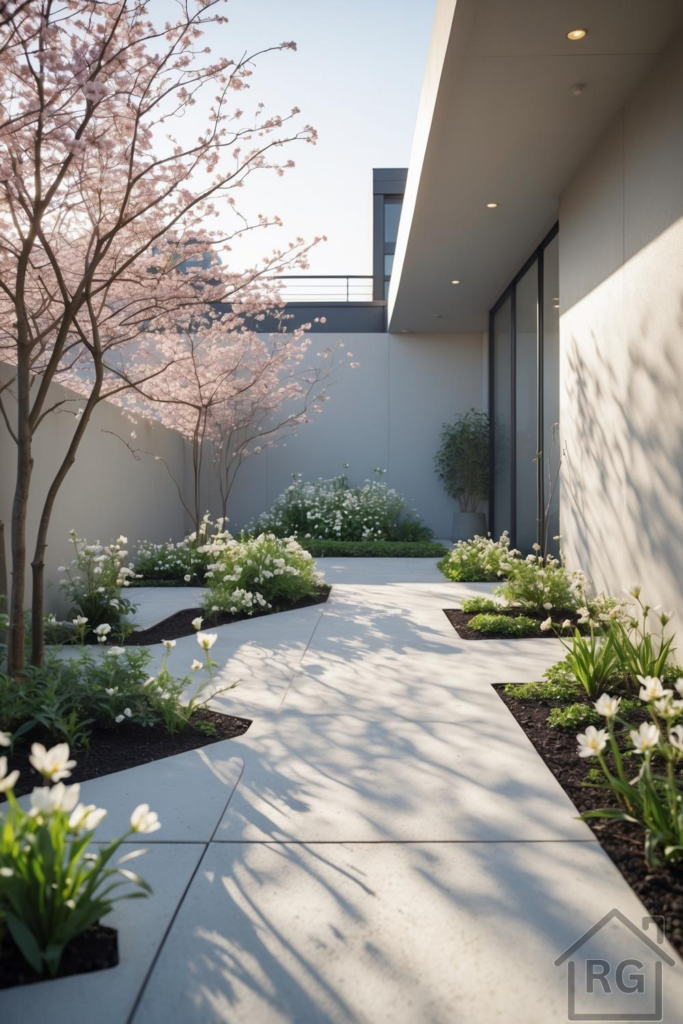
The side yard, often an overlooked and underutilized space, holds immense potential for transformation. Far from being a mere passageway, it can become a tranquil extension of your home, a private sanctuary, or a stunning visual corridor. This guide delves into the principles of designing a modern side yard garden, drawing inspiration from the elegant scene depicted, which masterfully blends minimalist hardscaping with soft, natural elements.
Embracing Modern Minimalism in Your Side Yard Garden
The foundation of a contemporary side yard garden often lies in its hardscaping. In the featured image, the light gray concrete pavers create a clean, structured pathway that guides the eye and provides a sense of order. This choice of material is not accidental; smooth concrete offers durability, a sleek aesthetic, and a neutral backdrop that allows the vibrant plant life to truly shine.
- Pathway Design: Consider geometric shapes and clean lines for your pathways. Instead of traditional straight lines, experiment with gentle curves or angular cuts, as seen in the image, to add visual interest and define distinct planting zones. The light gray tone of the concrete reflects light, making the side yard feel more expansive and brighter.
- Wall Integration: The minimalist light gray walls of the adjacent building seamlessly blend with the concrete path, creating a cohesive and uncluttered look. If your side yard is bordered by a fence or wall, consider painting it a neutral color like light gray, off-white, or even a deep charcoal to provide a sophisticated backdrop for your plantings.
- Material Consistency: Sticking to a limited palette of materials, such as concrete, glass, and natural wood (if applicable), reinforces the modern aesthetic and prevents the space from feeling chaotic.
The Allure of Pale Pink and White: A Harmonious Color Palette
The color scheme in this side yard garden is a masterclass in understated elegance. The delicate pale pink of the cherry blossoms provides a soft, ethereal contrast to the crisp white of the groundcover flowers, all set against the cool light gray of the hardscaping and building.
- Cherry Blossoms: These iconic trees, with their rough, textured bark and clouds of soft pink blooms, bring vertical interest and a sense of seasonal beauty. When selecting a cherry blossom variety, consider its mature size and bloom time to ensure it fits your space and climate. Their ephemeral beauty makes their spring display all the more cherished.
- White Flowering Groundcover: The abundance of white flowering plants, possibly Candytuft (Iberis sempervirens) or similar low-growing perennials, creates a lush, carpet-like effect. White flowers are incredibly versatile; they brighten shady areas, provide a calming visual, and pair beautifully with almost any other color. They also stand out dramatically against the dark earth or mulch.
- Strategic Greenery: While pink and white dominate the blooms, the underlying dark green foliage provides essential depth and structure. This deep green acts as a grounding element, allowing the lighter colors to pop. Consider evergreen shrubs or low-maintenance perennials that maintain their green hue throughout the year.
Strategic Planting for a Thriving Side Yard Garden
Even narrow side yards can become lush havens with thoughtful plant selection and arrangement. The key is to choose plants that thrive in your specific conditions (sunlight, soil type) and to layer them effectively.
- Layering Plants: Notice how the garden beds feature different heights. The tall cherry blossom trees form the upper canopy, while the white flowering plants create a dense, lower layer. This layering adds visual depth and makes the garden feel more established and full.
- Choosing the Right Plants: For the white groundcover, consider plants like:
- Candytuft (Iberis sempervirens): A low-growing evergreen perennial with abundant white flowers in spring.
- Sweet Alyssum (Lobularia maritima): A fragrant annual that produces masses of tiny white flowers.
- Creeping Phlox (Phlox subulata ‘White Delight’): A mat-forming perennial ideal for sunny spots.
- Snow-in-Summer (Cerastium tomentosum): A silvery-leaved perennial with white flowers, excellent for dry, sunny areas.
- Soil Preparation: Ensure your garden beds have well-draining soil, enriched with organic matter. This is crucial for the health and vigor of your plants, especially in confined spaces.
- Mulching: The dark mulch visible in the image serves multiple purposes: it suppresses weeds, retains soil moisture, and provides a neat, contrasting backdrop for the white flowers and light concrete.
Material Matters: Beyond the Basics
The choice of materials extends beyond just the pathways and walls. Every element contributes to the overall feel of your side yard garden.
- Glass Elements: The large glass doors and windows of the adjacent building blur the lines between indoor and outdoor spaces. This creates a sense of openness and allows natural light to flood the interior while offering beautiful views of the garden. If you have the option, consider incorporating large glass panels or sliding doors to enhance this connection.
- Potted Plants: A single, well-placed potted plant, like the one seen near the building entrance, can add a touch of greenery and soften hard architectural lines. Choose a simple, modern planter in a neutral tone to maintain the minimalist aesthetic.
- Lighting Fixtures: Recessed ceiling lights, as shown under the building’s overhang, provide subtle, ambient illumination for evening enjoyment. Consider low-voltage landscape lighting to highlight specific plants or pathways, enhancing the garden’s beauty after dusk.
Creating Atmosphere and Ambiance
A successful side yard garden is not just about plants and hardscaping; it’s about crafting an experience. The interplay of light and shadow, the scent of blossoms, and the gentle rustle of leaves all contribute to the atmosphere.
- Light and Shadow Play: Observe how the sunlight casts intricate shadows of the cherry blossom branches onto the concrete path and walls. This natural artistry adds dynamic visual interest throughout the day. When planning your garden, consider how sunlight moves across the space and how plants will interact with it.
- Sensory Experience: Beyond sight, engage other senses. Choose fragrant flowers like sweet alyssum or daphne. Consider a small water feature for soothing sounds, or plants with interesting textures that invite touch.
- Seating Nooks: Even in a narrow side yard, a small bench or a pair of slim chairs can transform a corner into a cozy reading spot or a place for quiet contemplation. Choose furniture that complements the modern aesthetic.
Maintenance Tips for a Pristine Side Yard Garden
Maintaining a clean and tidy side yard garden is crucial for preserving its modern, serene appeal.
- Regular Weeding: With defined garden beds, weeding becomes more manageable. Regular attention will prevent weeds from competing with your chosen plants and maintain the crisp lines of your design.
- Pruning: Keep your cherry blossom trees and other shrubs well-pruned to maintain their shape and promote healthy growth. For flowering plants, deadhead spent blooms to encourage continuous flowering.
- Edging: Maintain sharp edges between your concrete pathways and garden beds. This creates a polished look and prevents soil from spilling onto the hardscaping.
- Irrigation: Consider installing a drip irrigation system, especially for plants in narrow beds, to ensure consistent watering and reduce water waste.
DIY Elements to Personalize Your Side Yard Garden
While professional design can be invaluable, many elements of a modern side yard garden can be tackled as DIY projects.
- Laying Pavers: With careful planning and the right tools, laying concrete pavers can be a rewarding DIY project. Ensure proper base preparation for stability and drainage.
- Planting Beds: Designing and planting your garden beds allows for personal expression. Research plants suited to your local climate and soil conditions.
- Simple Lighting: Battery-operated or solar-powered path lights can be easily installed to add ambiance without complex wiring.
- Container Gardening: Adding potted plants is a simple way to introduce greenery and color, and they can be easily rearranged or swapped out seasonally.
A well-designed side yard garden is a testament to thoughtful planning and an appreciation for both natural beauty and modern design. By focusing on clean lines, a harmonious color palette, and strategic plant selection, you can transform this often-forgotten space into a cherished part of your home, offering beauty and tranquility throughout the seasons.