
Step into Timeless Elegance: Crafting Your Tudor-Inspired Living Space
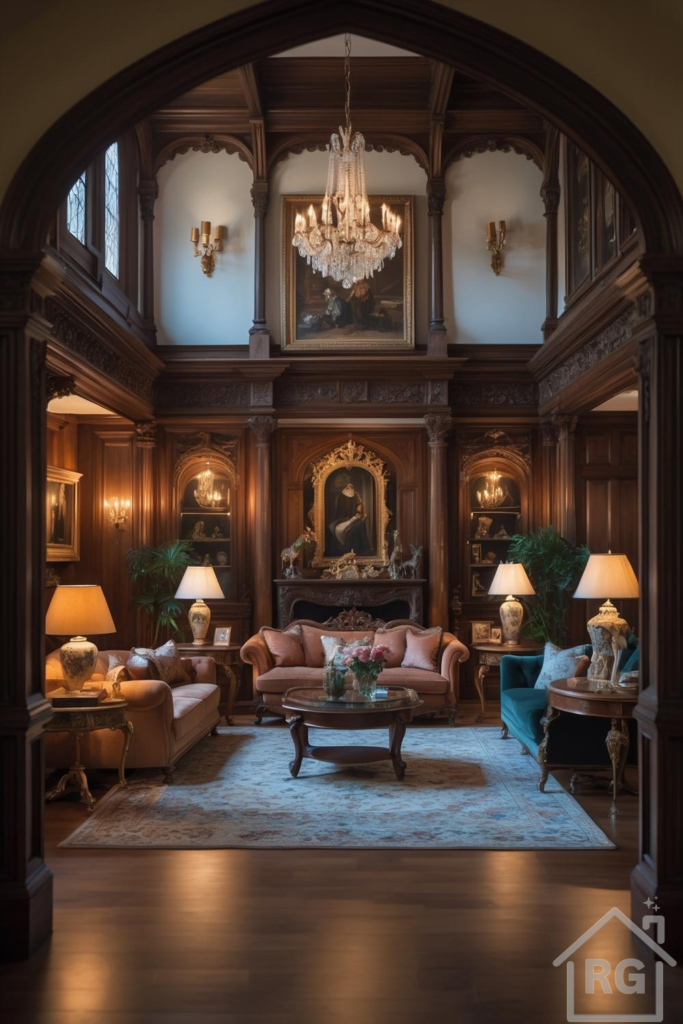
The Tudor architectural style evokes a sense of history, grandeur, and enduring charm. Characterized by rich materials, intricate details, and a warm, inviting atmosphere, it translates beautifully into interior design, particularly in living spaces. The living room featured here is a stunning example of modern Tudor elegance, blending traditional elements with comfortable, classic furnishings. Let’s explore how to capture this sophisticated aesthetic in your own home.
The Foundation: Rich Woodwork and Architectural Details
At the heart of Tudor design lies the prominent use of dark, substantial wood. This room masterfully employs this principle with extensive wood paneling covering the walls, substantial ceiling beams, and intricately carved details around arches and the fireplace. The deep, warm tones of the wood create an immediate sense of richness and history.
- Wall Paneling: Consider full or half-height wood paneling in oak, walnut, or mahogany stains. Look for designs with raised panels or decorative carvings for added authenticity.
- Ceiling Treatments: Exposed beams or coffered ceilings add architectural interest and reinforce the Tudor feel. Even decorative faux beams can achieve a similar effect.
- Arches and Moldings: Incorporate arched doorways or windows, as seen framing the view into this room. Detailed crown molding and baseboards further enhance the traditional character.
Color Palette: Warmth and Contrast
While dark wood dominates, the color palette should balance this richness with lighter and complementary tones. This room uses a sophisticated blend:
- Dominant Wood Tones: Deep browns (#5C3A21) provide the foundational warmth.
- Neutral Walls & Rug Base: Creamy beige (#EAE0D1, #F5F5DC) on the upper walls and within the area rug prevents the space from feeling overly dark and provides a neutral backdrop.
- Rich Accent Colors: Terracotta/dusty rose (#C87E6C) on the main sofas and a deep teal (#2A6465) on the accent armchair add personality and visual interest without overwhelming the space.
- Metallic Highlights: Gold and brass tones (#B8860B) appear in the chandelier, wall sconces, picture frames, and decorative objects, adding a touch of luxury and reflecting light.
Furniture and Layout: Classic Comfort
Furniture in a Tudor-style living room should feel substantial, comfortable, and classic. Avoid overly modern or minimalist pieces. This room features:
- Traditional Silhouettes: Rolled arms on the sofas and classic shapes for the tables align with the historical influence.
- Luxurious Fabrics: Velvet (on the teal armchair) and rich woven fabrics (on the terracotta sofas) add textural depth and comfort.
- Symmetrical Arrangement: The furniture is arranged symmetrically around the central coffee table and fireplace, creating a sense of order and formality appropriate for the style. Multiple seating areas encourage conversation.
- Ornate Tables: Coffee and side tables feature carved details or traditional shapes, complementing the woodwork.
Lighting: Creating Ambiance
Lighting is crucial in a room with dark wood. Layering different light sources ensures the space feels warm and inviting, not gloomy.
- Statement Chandelier: A large, ornate crystal chandelier serves as a stunning focal point, adding grandeur and reflecting light beautifully.
- Wall Sconces: Traditional sconces provide ambient lighting and highlight architectural details. Choose designs in brass or wrought iron finishes.
- Table Lamps: Multiple table lamps with classic ceramic or metal bases and fabric shades offer task lighting and contribute to the cozy atmosphere. Ensure the shade color complements the overall palette (like the cream shades here).
- Natural Light: Maximize natural light where possible. Tall windows, even if partially obscured by architectural elements, are characteristic.
Accessories and Decor: The Finishing Touches
Accessories complete the Tudor look, adding personality and reinforcing the theme.
- Area Rug: A large, patterned area rug anchors the seating area, adds color, texture, and warmth underfoot. Traditional Persian or Oriental designs work well.
- Artwork: Choose classic paintings or portraits in ornate frames. Large-scale pieces, like the one above the fireplace and the prominent piece below the chandelier, make a significant impact.
- Fireplace Focus: An ornate fireplace mantel is a key Tudor element. Decorate it with classic objects like sculptures (as seen here), candlesticks, or a decorative mirror.
- Greenery: Tall houseplants add life and a touch of natural color, softening the formality of the wood.
- Decorative Objects: Incorporate vases (like the one with pink flowers on the coffee table), books, and small sculptures that align with a classic aesthetic.
Creating a Tudor-style living room is about balancing rich, historical elements with comfort and warmth. By focusing on quality materials like dark wood, layering textures through fabrics and rugs, choosing classic furniture, and illuminating the space effectively, you can design a truly elegant and timeless retreat inspired by this enduring style.